

A Chiang Mai spa operator running a four-night retreat priced at 18,000 baht is competing, without necessarily knowing it, against a Balinese retreat priced at three times that amount for the same duration. The Bali product is not better by any measurable standard of physical delivery. The accommodation, the food, the treatments, the natural setting — none of those inputs explain the price difference.
What explains it is the story the product is selling about the person who buys it.
The separation between Bali and the rest of Southeast Asian wellness tourism is not a separation in supply quality. Thailand has more wellness infrastructure, more trained therapists, more internationally accredited retreat programmes, and a deeper culinary tradition than Bali in almost every relevant category. What Bali has built is something harder to replicate: a promise about what visiting does to your sense of self, not your sense of comfort.
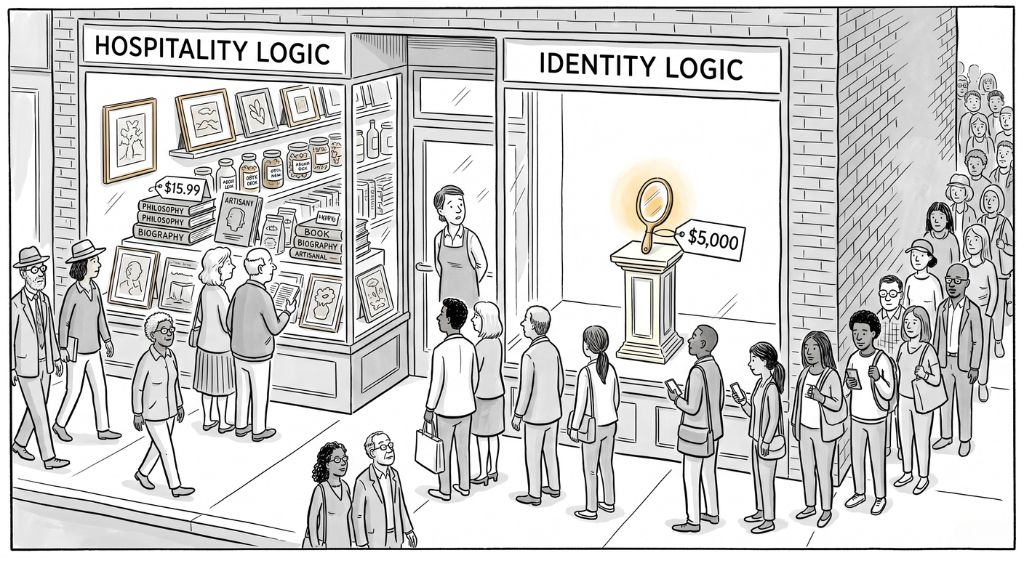
Tourism economists call this the difference between hospitality logic and identity logic. A hospitality model says: we will make you feel good during your stay. An identity model says: coming here lets you become a version of yourself you value more. The second promise is harder to deliver, but it carries a fundamentally different price ceiling, because people will pay very different amounts to feel relaxed versus to feel transformed. Bali has spent fifteen years building its entire positioning around the second promise. Western tourists, particularly from Europe and North America, now travel specifically to Ubud in search of psychic growth, with spiritual guides and retreats actively marketed on global platforms in a way that no equivalent destination in Thailand has managed to engineer at scale. The global reach of that positioning, from Eat Pray Love through to the current generation of wellness influencers using Ubud as a backdrop, has compounded into something that is now genuinely difficult to dislodge.
Thailand has not ignored wellness. The country has a national wellness tourism strategy, government-backed certification programmes, and an industry that generates substantial revenue. But the framing within which most of that industry operates is still largely comfort-based. Treatments, rest, recovery, cuisine. These are real and valued goods, and Thailand delivers them at a high standard. They do not, by themselves, generate the willingness to pay that identity-based positioning creates, and the pricing data bears that out: comparable wellness experiences in Bali consistently command a premium over Thailand that has nothing to do with the quality of the input.

The question for Chiang Mai is specific and worth sitting with. The city has the raw ingredients of an identity-driven destination: a distinct culture with a traceable history, a meditation and mindfulness tradition with genuine depth, a food culture meaningfully different from Bangkok, and a creative independent business community that has attracted exactly the kind of visitor looking for something more considered than beach tourism. The question is whether those assets are being packaged and priced in a way that reflects their meaning to the visitor, or whether they are being priced down to match volume-market expectations.
A wellness retreat in Bali runs $1,189 for a comparable week at a point where a Chiang Mai equivalent sits at roughly a third of that price. That gap does not reflect a quality gap. It reflects a positioning gap, and positioning is something operators can change without waiting for national tourism policy to catch up. Whether Chiang Mai’s wellness and hospitality businesses have the appetite to close that gap is a separate question. Recognising that it exists, and that it is a design problem rather than a demand problem, is the place to start.
