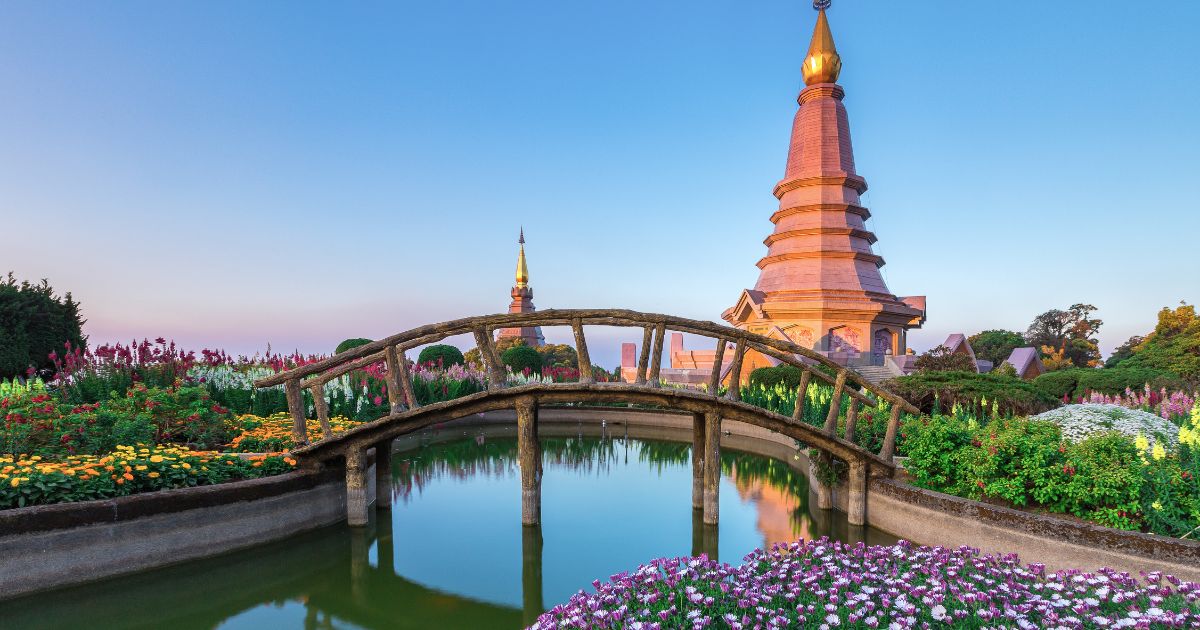
There’s silence—and then there’s Thai-hilltop silence.
The kind where the loudest sound is a gecko’s chirp at dusk, where bamboo sways in rhythm with your breath, and the forest itself seems to pause with you.
This isn’t just about quieting the world outside. In the Thai hills, silence has the power to reset the noise inside.
Backed by emerging neuroscience and rooted in centuries of contemplative practice, long-term silence is becoming more than a spiritual pursuit—it’s a proven strategy for cognitive renewal. Increasingly, entrepreneurs, founders, and creatives are retreating to Chiang Mai’s forest sanctuaries for a full-system reset.
The Neuroscience of Stillness
Our modern brains are drowning in inputs—emails, pings, feeds, ads. The default mode network (DMN), the brain’s hub for self-talk and narrative-building, stays permanently switched on. Imagine 78 browser tabs open—half of them autoplaying videos.
Silence closes those tabs.
A 2015 study found that mice exposed to two hours of silence daily developed new hippocampal cells—the region that regulates memory and emotional balance. For humans, extended silence has been linked to:
- Lower cortisol (stress) levels
- Deeper, higher-quality sleep
- Improved creative problem-solving
- Stronger emotional regulation and empathy
After weeks of silence, the brain doesn’t just rest—it reorganizes, strengthens, and sharpens.
Quick Fact: Chiang Mai consistently ranks among the world’s top wellness destinations, thanks to its mix of traditional healing, forest temples, and emerging neuroscience-backed retreats.
Why the Thai Hills Are Different
Silence in a city is never really silent. It’s a pause between sirens, construction, and notifications.
In Chiang Mai’s hills, silence sounds different: birdsong at sunrise, temple bells in the distance, bamboo leaves rustling with the wind. This is restorative sound—the kind that supports deep parasympathetic rest.
Surrounded by forest, the body naturally syncs with circadian rhythms. Brainwaves begin to shift from beta (alert, active) to alpha and theta (calm, meditative). Add in nutrient-rich Thai meals, barefoot walking, and screen-free days, and the nervous system starts to feel less like a tangled wire and more like a clear channel.
Local Insight: Many silent retreats in Northern Thailand are influenced by forest temple traditions. Even secular retreat centers borrow from monastic rhythms—early mornings, mindful meals, and natural simplicity.
The 30-Day Arc: What Really Happens
- Day 3: The detox phase. Restlessness, boredom, irritation surface. The mind craves input—proof that the purge has begun.
- Day 7: Clarity takes hold. Thought loops ease. Colors seem brighter. Sleep deepens.
- Day 21: Stillness arrives. You stop performing for yourself. Narratives quiet down. You begin hearing what lives beneath the noise.
- Day 30: Flow returns. Ideas arrive whole, like notes from a bell. Thoughts spread out, deliberate, intentional. Synchronicity feels natural again.
Did You Know? Some companies now offer paid “silent sabbaticals” to founders and executives. Chiang Mai’s retreats have become an attractive option for location-independent professionals looking to combine deep rest with cultural exploration.
Who Benefits Most?
- Founders between chapters
- Creatives facing blocks
- Executives and professionals at risk of burnout
- Anyone who has been too online for too long
Silence is not escape. It’s preparation—the groundwork for the next chapter of clarity, creativity, and focus.
Where to Experience This
Pirom House offers 30–120 day silent retreats in the forested hills outside Chiang Mai. Expect:
- Forest bungalows with no Wi-Fi (unless requested)
- Morning silence until 11 a.m.
- Space to let your mind reset and your nervous system recover
Apply for a Long-Term Silent Retreat
Silence Is Not Empty
Silence isn’t a void. It’s the canvas where meaning echoes.
Give your brain the break it’s been asking for—not a dopamine fast or a spa weekend, but a full month of stillness. What you gain is not absence, but clarity.