
Something significant happened in Thai tourism in the first week of March 2026 that most Chiang Mai business owners have not yet registered.
The Tourism Authority of Thailand announced the launch of a fully rebuilt Amazing Thailand app, available for download from 15 March, developed in partnership with Mastercard and powered by an AI chatbot designed to guide visitors through every stage of their time in the country.
At the same time, TAGTHAi — Thailand’s national tourism super-app backed by the Thai Chamber of Commerce and TAT — has grown to over two million downloads and already runs an active Chiang Mai City Pass with 60 local partner businesses built into it.
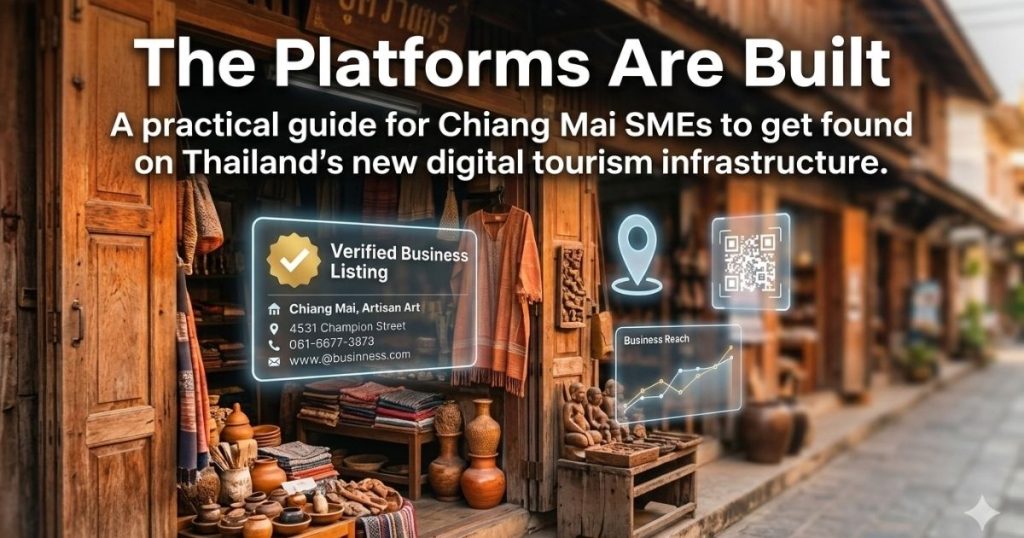
Together, these two platforms represent a fundamental change in how international visitors discover, choose, and book businesses in Chiang Mai. If your business is not inside that infrastructure, you are increasingly invisible to the visitors who are now arriving with an AI travel app open on their phone before they even land.
The old discovery model is breaking down
For most of the past decade, a Chiang Mai restaurant, spa, guesthouse, or tour operator got found one of three ways: Google search, TripAdvisor reviews, or word of mouth from other travellers. Those channels still matter, but a new layer is being built on top of them, and it changes the rules in ways that will disadvantage operators who do not adapt.
When a visitor opens the new Amazing Thailand app and asks for a recommendation — a cooking class, a massage, somewhere to eat near Nimman — they are not getting a Google search result. They are getting a personalised suggestion generated by an AI system that draws on verified, structured data. The platform is designed specifically to push visitor spending beyond Bangkok and the beach resorts, directing tourists toward a wider range of accommodation, dining, shopping, experiences, and events — and encouraging longer stays in destinations like Chiang Mai.
That strategic intent is built into the platform’s architecture. It does not happen automatically for every Chiang Mai business. It happens for the businesses that the platform’s data sources can find, verify, and classify accurately.
What the Amazing Thailand app does for local businesses
At the core of the enhanced app is an AI chatbot providing real-time assistance, personalised recommendations, and practical guidance throughout a visitor’s stay. Integrated Mastercard Priceless experiences offer curated Thai activities, culinary journeys, and exclusive privileges across both major and secondary destinations. Private cooking classes in Chiang Mai are cited in TAT’s own promotional materials as an example of the kind of local experience the app surfaces for visitors.
Which cooking schools, which spas, which restaurants appear in those recommendations is not random. It is determined by what verified data the platform can find about each business. The app launched on 15 March 2026. Businesses with no structured digital presence will not appear in it. Businesses that invest in building that presence now will have a head start that compounds over time as the app’s recommendation patterns become established and harder to break into.
TAGTHAi has already demonstrated this model in Chiang Mai
The Amazing Thailand app is the newest development, but TAGTHAi has been running a Chiang Mai City Pass since 2023 that already demonstrates exactly how this model works for local operators. The pass features a network of over 60 partner businesses across the city — attractions, workshops, restaurants, and spas — and is available at 1,490 baht for a regular pass and 2,990 baht for premium. When a visitor purchases it, every business in the network becomes a pre-paid destination on their itinerary.
TAT Governor Yuthasak Supasorn endorsed the pass directly, citing Chiang Mai’s Lanna culture and natural heritage as the core draw for the visitors the pass is designed to serve. The platform’s chairman described it explicitly as a distribution channel for local SMEs to expand their international customer base and build digital revenue streams that do not depend on commission-heavy foreign platforms.
A TAGTHAi MEGA SALE campaign running August to October 2025 offered up to 30% discounts across passes and tours, integrating services from local operators in wellness, excursions, and experiences with the explicit goal of distributing income to SMEs rather than concentrating it in large operators. This is functioning infrastructure, not a government pilot.
The visibility gap and what it costs
The businesses most at risk from this shift are not the ones with no digital presence at all. They are the ones with an outdated Google Maps listing, a Facebook page last updated two years ago, and no verified presence in any source that AI recommendation systems actually draw on. These businesses exist in the physical world but are invisible in the data layer that now shapes how visitors navigate Chiang Mai.
The cost is not abstract. A visitor’s AI travel companion recommends somewhere else. The visitor has come to Chiang Mai, the spending happens, it simply goes to the operators who made themselves findable in the right places.
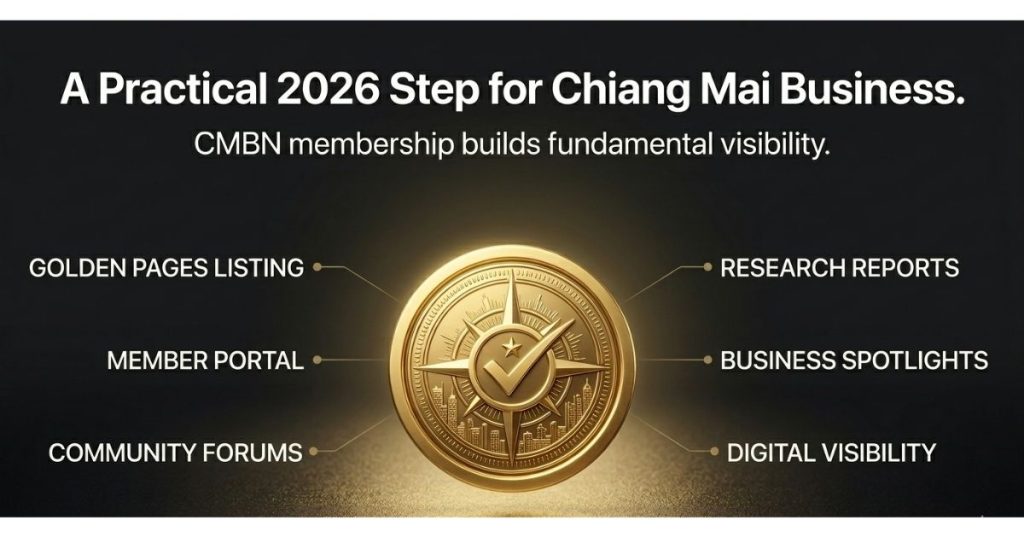
The CMBN Golden Pages is one of the few sources in Chiang Mai producing human-verified, structured local business data at the category depth that AI recommendation systems require. In an environment where the national tourism infrastructure is being rebuilt around data quality and verified sources, a listing in a trusted, human-curated directory is not a peripheral benefit. It is a foundational one.
The infrastructure is live. The question for every Chiang Mai operator is whether their business is visible within it.