

When most people think of starting a café, they think of leases, landlords, fit-outs, and months of burn before breaking even.
Rocket Coffee flips that on its head.
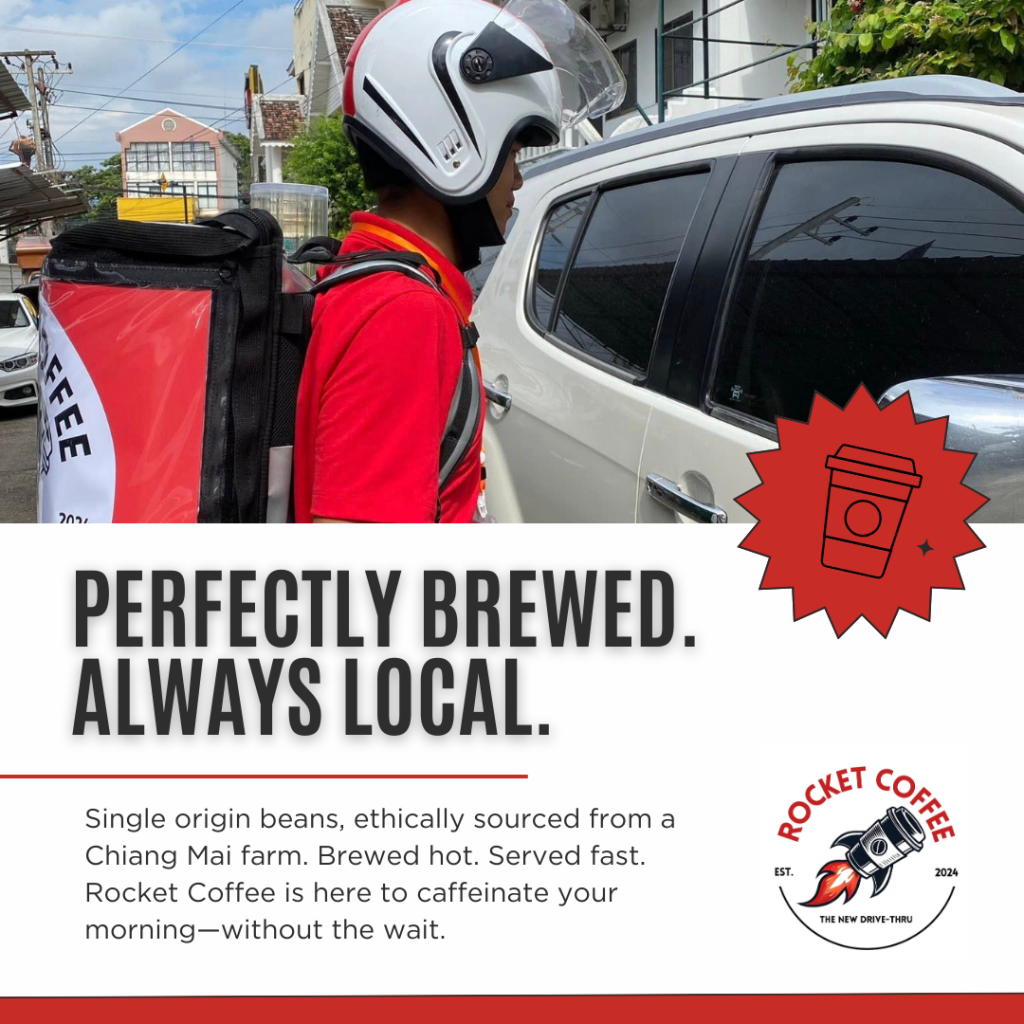
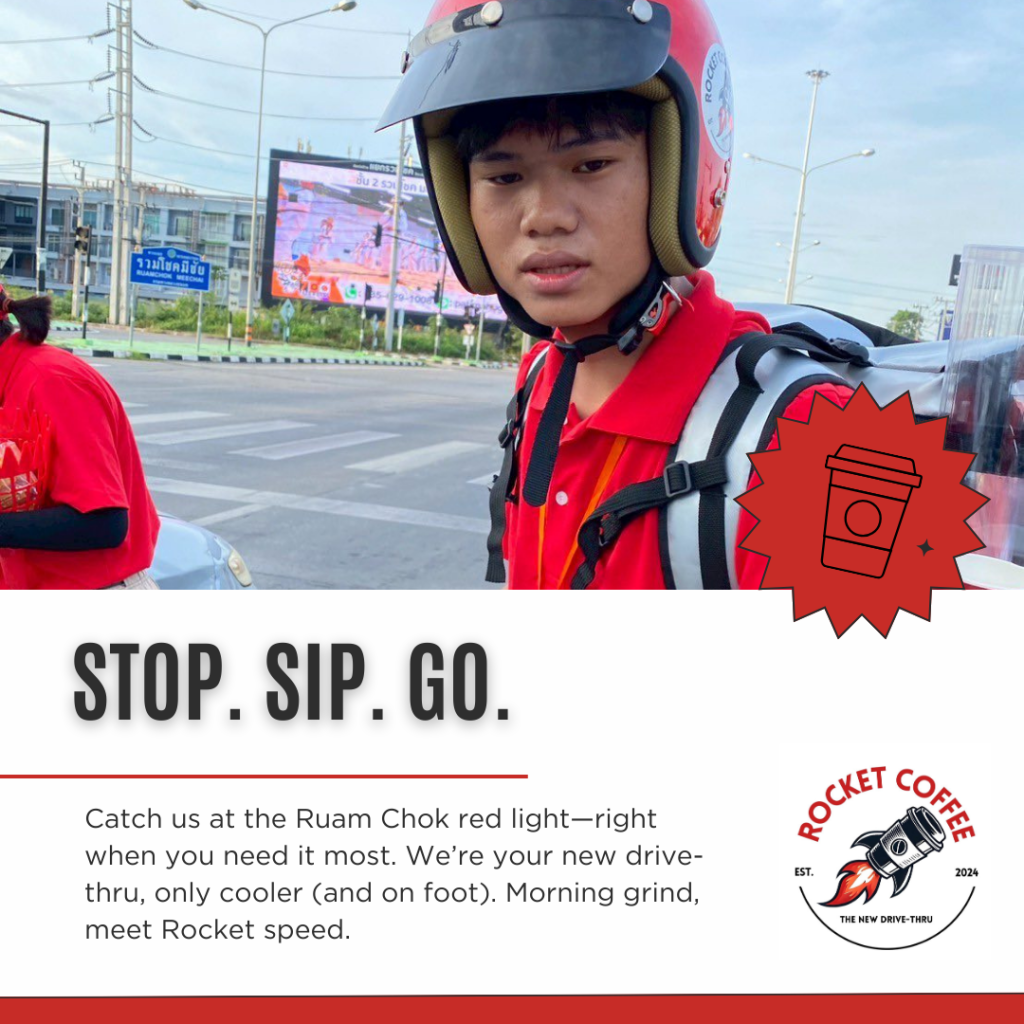
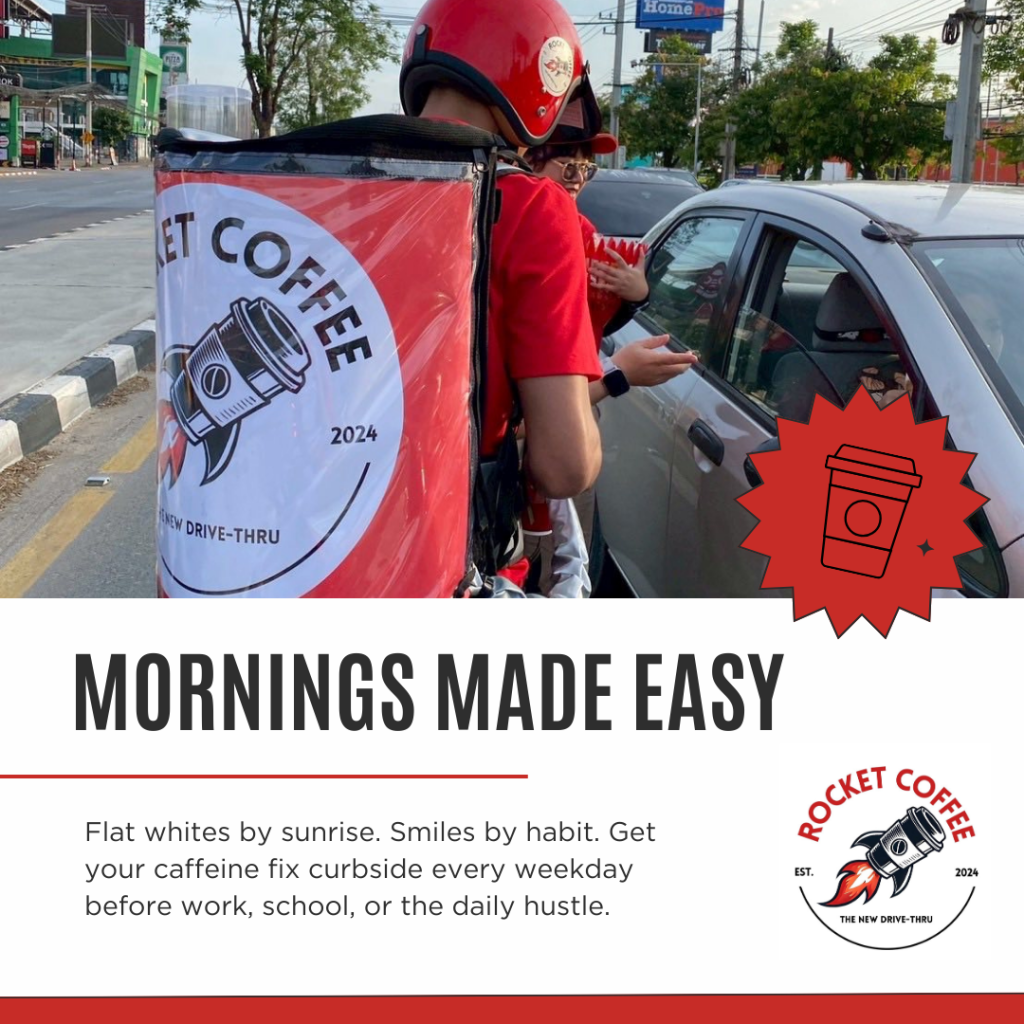
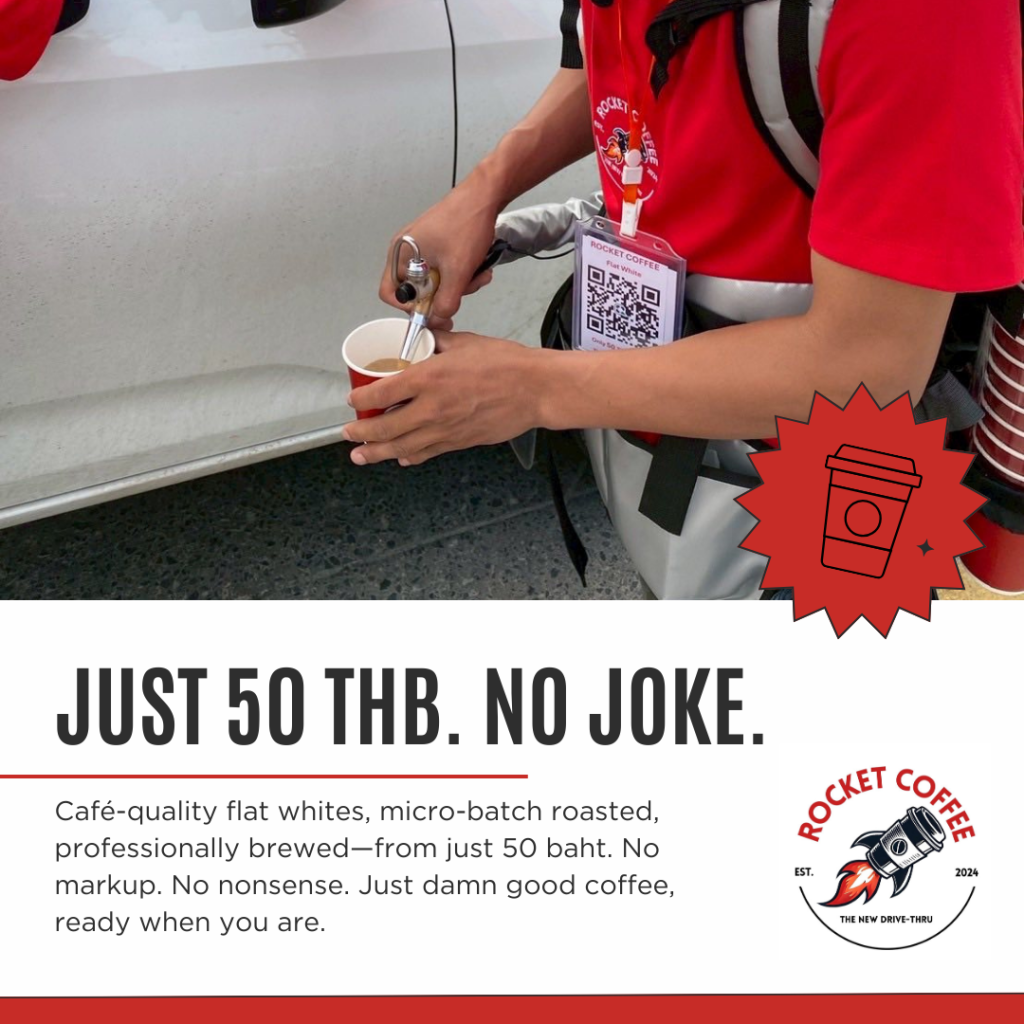
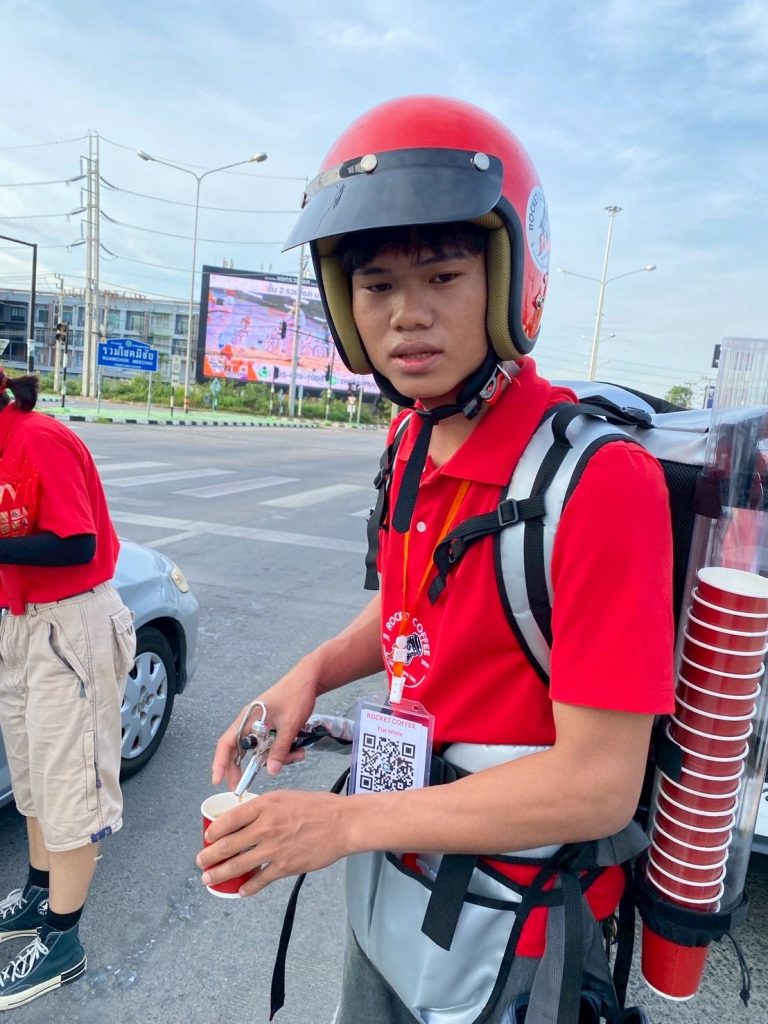
Developed in early 2025 by Chiang Mai entrepreneur and restaurateur James Noble, Rocket Coffee is a low-overhead, mobile coffee franchise with a product that fits in a backpack—and a business model designed to reduce nearly every friction point faced by first-time business owners.
The value proposition is not just in the coffee. It’s in the mechanics: ultra-low startup cost, streamlined operations, and a brand with both ethical sourcing and a clear roadmap for scale.
CMBN Local Business Spotlight
The Business Concept: Redesigning the Franchise Unit
At its core, Rocket Coffee is a reaction to the rising fixed costs and operational rigidity of traditional food and beverage models.
“We wanted to create a franchise model where the cost to start is minimal and the upside is immediate,” Noble explains. “No rent, no buildout, no staff. Just a product, a process, and a person.”
The Rocket franchise costs under 100,000 THB, which includes:
- A custom-engineered German-made mobile brewing unit
- Barista training
- Rocket branding (uniform, signage, cups)
- Initial bean stock
- A go-to-market guide with pricing, site suggestions, and mobile sales strategies
Franchisees operate independently and earn 100% of their daily revenue. There are no royalty or franchise fees during the pilot phase. The model is being refined in Chiang Mai with plans to expand into other provinces by Q4 2025.
Economics at a Glance
Projected Earnings:
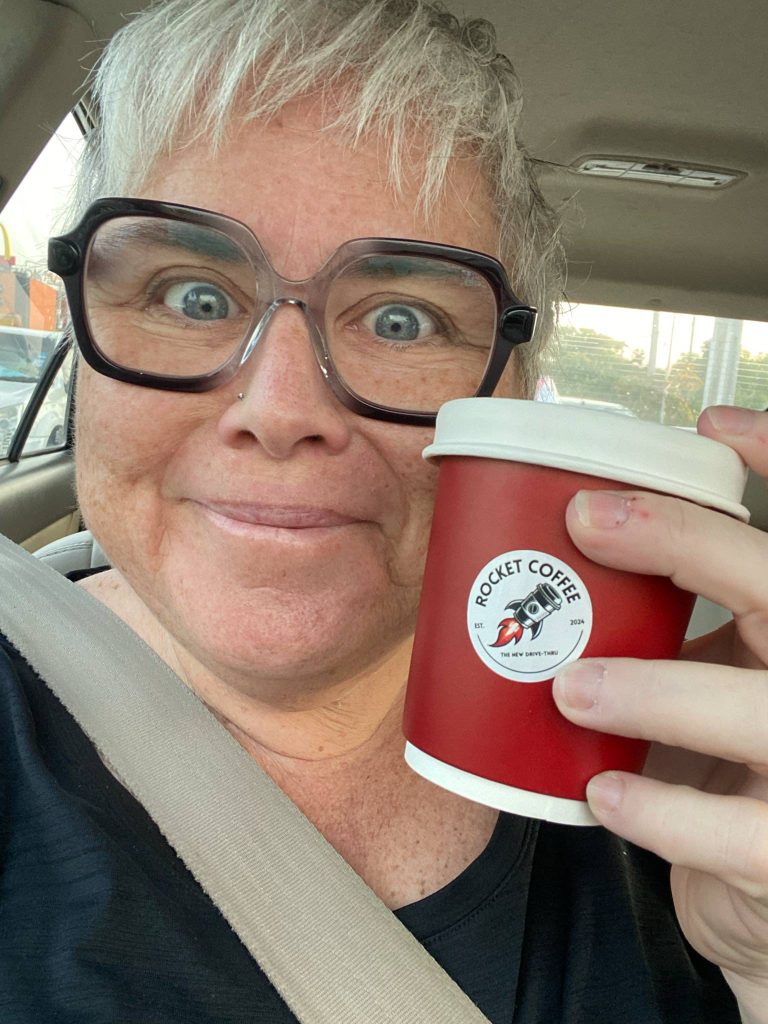
Most pods aim to serve 30–40 cups per day at 50 THB per cup, equaling 1,500–2,000 THB/day, or 45,000–60,000 THB/month. Some early franchisees have exceeded this during school mornings and weekend markets.
Break-Even Period:
At a conservative 20 cups/day, franchisees typically recoup their investment in under 60 days.
Recurring Costs:
- Coffee stock: 10–15 THB per cup
- Fuel (butane): negligible
- No rent, utilities, or salaried staff
Optional reordering of branded supplies (cups, uniforms)
“It’s a lean model,” says Noble. “And it’s designed that way to help people become profitable fast, not just busy.”
Sourcing, Supply Chain, and IP
The entire operation is tightly integrated:
- Coffee is sourced from Seeds of Hope, a Chiang Mai–based social enterprise working with highland farmers.
- The mobile brewing system is a patented German-engineered unit developed specifically for Rocket Coffee.
- Logistics and fulfillment are handled internally, ensuring supply consistency and quality control.
Each franchisee is equipped with a unique kit code and product traceability system to maintain consistency and standardize taste across all pods.
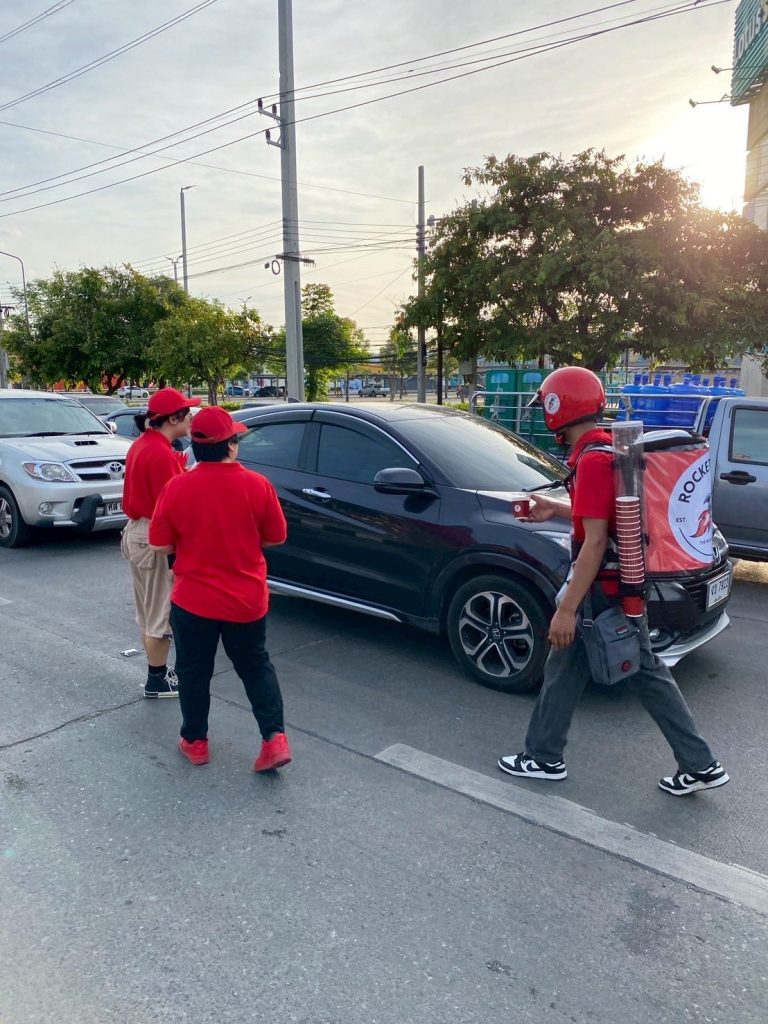
Market Positioning: Functional, Not Fancy
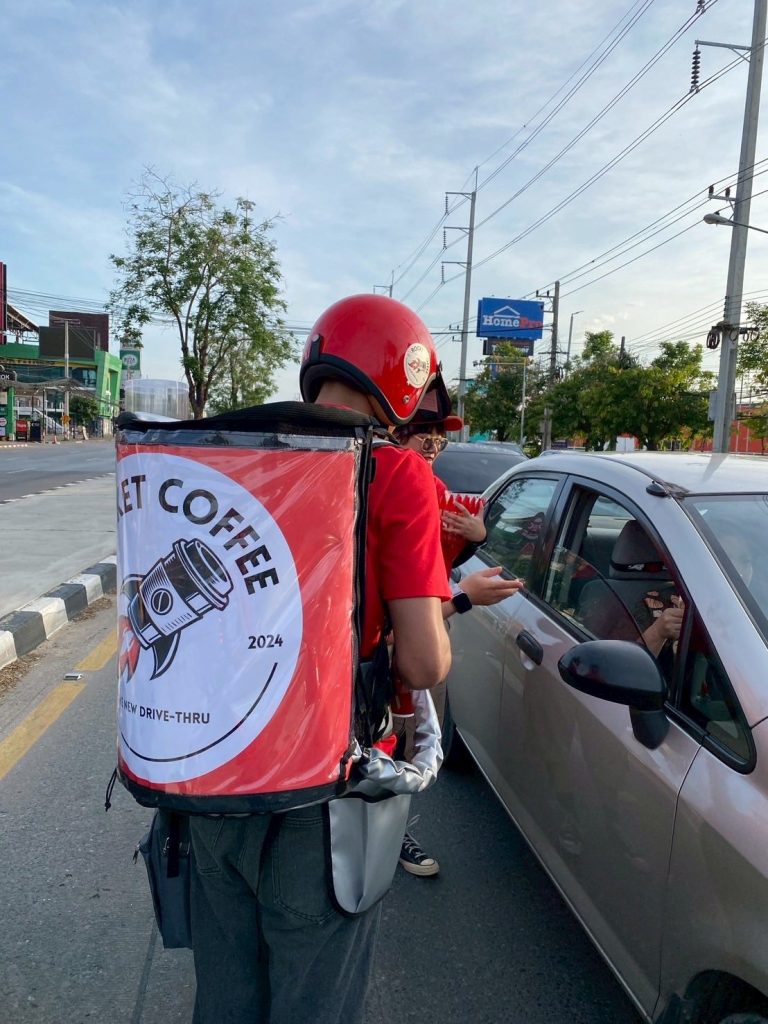
Rocket Coffee doesn’t aim to compete with Chiang Mai’s café scene on aesthetics or ambience. It’s designed to serve a different market: convenience-based, price-sensitive, time-constrained customers in dense foot traffic zones—schools, hospitals, transport stops, and early-morning commuter routes.
This makes Rocket Coffee particularly viable in:
- School zones (6:30–9:30 AM)
- Coworking and office clusters
- Market pop-ups and festivals
- Suburban areas underserved by quality coffee
“We don’t want to sell ‘vibes.’ We want to sell a reliably good cup of coffee when people actually need it most.”
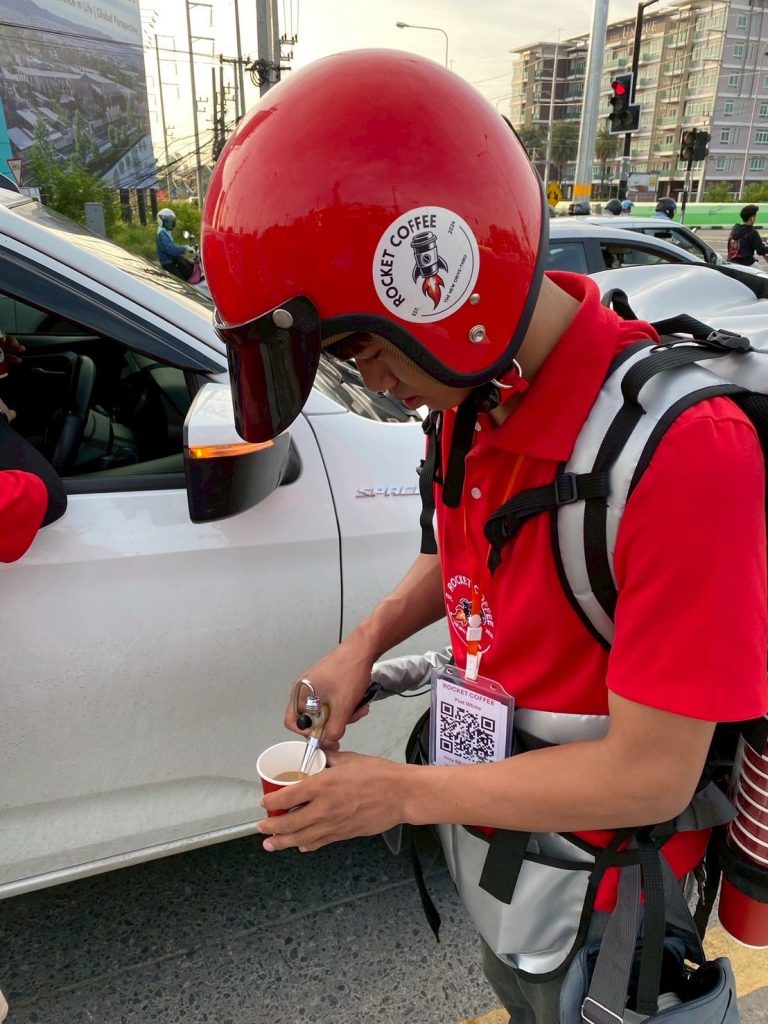
Franchisee Profile and Support
Ideal candidates for a Rocket franchise are:
- First-time entrepreneurs
- Those seeking low-barrier passive income
- Individuals who need flexible work hours
- Entrepreneurs looking to operate multiple pods
Rocket Coffee offers full pre-launch training and informal mentorship. Franchisees retain full operational control but receive launch support, marketing collateral, and optional location guidance.
The company has already sold 4 franchise units in 4 days following launch, with further pods in pre-launch stages across Chiang Mai’s outer neighborhoods.
What This Means for CMBN Readers
For Chiang Mai Business Network members, Rocket Coffee represents a bit more than just a coffee startup. It’s an example of:
- Local supply chain utilization
- Micro-franchising done right
- Startup infrastructure simplified for replication
- A case study in bootstrapped product-market fit
It also opens doors for partner opportunities—including location-based cross-promotions (co-working spaces, small malls, event venues), B2B bulk ordering, and even white-labeled pod variants for corporate campuses.
As a proof of concept, it challenges traditional SME assumptions and invites discussion on how we define a “business” in 2025’s Chiang Mai economy.
Next Steps & Roadmap
In Q3 2025, Rocket Coffee plans to:
- Launch an interactive franchisee map showing live pod locations
- Roll out a digital loyalty system for customers via QR codes
- Expand into Bangkok, Khon Kaen, and regional transport hubs
- Begin small-batch R&D of Rocket Cold Brew and oat milk–based drinks
Franchise inquiries can be made directly.
CLICK FOR MORE INFO
